Consequentialistische betekenis ethiek
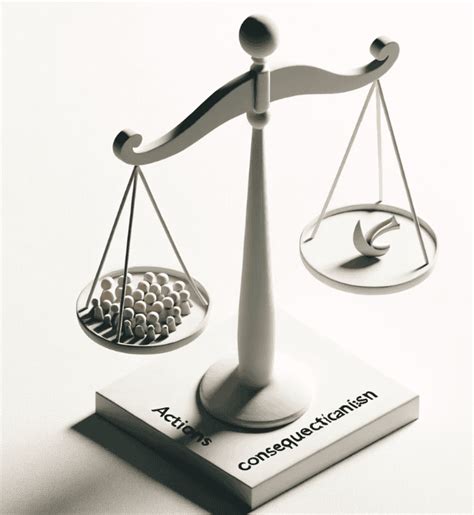
Een ethische theorie die geformuleerd wordt in termen van gevolgen en doelen, heet een consequentialistische of teleologische theorie. Consequentialisme staat zowel tegenover deontologische ethische theorieën, die juist of onjuist afleiden uit de aard van de daad zelf, als tegenover de deugdenethiek die eerder kijkt naar de aard van de agent. Deze toepassingen tonen de praktische relevantie van consequentialistische principes in het vormen van beleid dat gericht is op het maximaliseren van algemeen welzijn. Hedendaagse Uitdagingen De hedendaagse uitdagingen waarbij consequentialistische ethiek relevant is, omvatten complexe kwesties zoals klimaatverandering en technologische. Consequentialistische betekenis ethiek In de huidige betekenis werd het begrip ‘consequentialisme’ door Anscombe () geïntroduceerd om er verstrekkende gevolgen van veranderingen in het klassieke utilitarisme mee aan te duiden. Naar haar mening wilden Bentham en Mill alleen de geïntendeerde gevolgen van een handeling ethisch beoordelen, terwijl Sidgwick ervoor pleitte alle voorzienbare consequenties van een beslissing in.


Consequentialisme العربية; Български; Čeština; Cymraeg; Dansk; Deutsch; Eesti; Ελληνικά; English; Español; Esperanto; فارسی; Français; 한국어.

Ethiek
Ethiek is de tak van de filosofie die zich bezighoudt met de kritische bezinning op het juiste handelen. Deze pagina geeft een overzicht van de geschiedenis, de vormen en de theorieën van de ethiek, van de oude Grieken tot de moderne tijd. According to Aristotle, how to lead a good life is one of the central questions of ethics. [1]Ethics, also called moral philosophy, is the study of moral phenomena. It is one of the main branches of philosophy and investigates the nature of morality and the principles that govern the moral evaluation of conduct, character traits, and institutions. Ethiek ethiek f (plural ethieken) ethics, (study of) principles governing right and wrong conduct.Consequentialisme
Consequentialism, as its name suggests, is simply the view that normative properties depend only on consequences. This historically important and still popular theory embodies the basic intuition that what is best or right is whatever makes the world best in the future, because we cannot change the past, so worrying about the past is no more useful than crying over spilled milk. The term consequentialism was coined by G. E. M. Anscombe in her essay "Modern Moral Philosophy" in [4] [5] However, the meaning of the word has changed over the time since Anscombe used it: in the sense she coined it, she had explicitly placed J. S. Mill in the nonconsequentialist and W. D. Ross in the consequentialist camp, whereas, in the contemporary sense of the word, they would be.Gevolgen
Find all translations of gevolgen in English like consequences, result, consequence and many others. Zoek de betekenis en de Engelse vertaling van het woord gevolgen in het online woordenboek van Linguee. Bekijk ook de contextuele voorbeelden van gevolgen in verschillende teksten en bronnen.Gevolgen gevolgen translation in Dutch - English Reverso dictionary, see also 'geloven, gevoelig, gevoel, geologie', examples, definition, conjugation.
Morele theorie
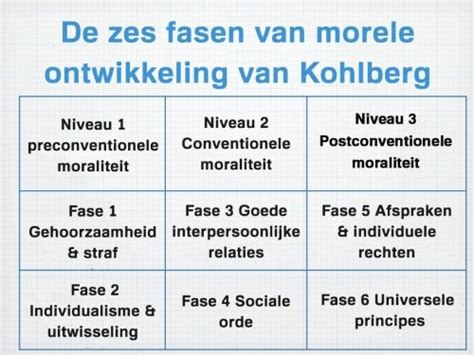
In Kohlbergs theorie over morele ontwikkeling, is er sprake van drie niveaus: preconventioneel, conventioneel en postconventioneel. Elk van deze niveaus is verder onderverdeeld in twee fasen. Het is belangrijk om te begrijpen dat we niet alle fasen doorlopen. Kohlberg’s theory of moral development outlines how individuals progress through six stages of moral reasoning, grouped into three levels: preconventional, conventional, and postconventional.- Morele theorie De theorie van Lawrence Kohlberg is een bekende theorie over morele ontwikkeling. Kohlberg bouwde voort op het werk van de Zwitserse psycholoog Jean Piaget en verdeelde de morele ontwikkeling in drie niveaus, met elk twee fases. Volgens Kohlberg doorloopt iedereen deze niveaus in vaste volgorde.